

Every year, Africa exports billions of dollars through an unlikely channel: its hospitals. From Nigeria to Kenya, patients travel to India, the United Kingdom, the United Arab Emirates, Turkey, and South Africa in search of treatments they believe are unavailable or inaccessible at home.
The result is an estimated annual loss of about $7 billion to medical tourism across the continent, with Nigeria accounting for more than $1 billion of that outflow.
Against this backdrop, Akwa Ibom State's Ibom Medical City is more than another healthcare infrastructure project. It is an ambitious attempt to reverse decades-long exports of patients, expertise, and capital while positioning the state as a destination for specialised healthcare services in West and Central Africa.
Medical tourism has become one of Africa's most costly development concerns. Beyond the direct financial losses, countries lose opportunities to strengthen local hospitals, create jobs, expand research, and build confidence in domestic healthcare systems. At its core, medical tourism is a confidence issue.
Patients travel because they trust foreign systems to provide better technology, specialist care, and treatment outcomes.
The unveiling of the Ibom Medical City by Governor Umo Eno, therefore, carries significance beyond Akwa Ibom. It represents an effort to challenge the notion that world-class healthcare can only be found abroad.
Describing the project as one of the most audacious investments of his administration, the governor said the vision was conceived not only for the Akwaa Ibom people but also for Nigerians and Africans seeking quality healthcare closer to home. He noted that the project aligns with the healthcare objectives of the state's ARISE Agenda and the Federal Government's Renewed Hope Agenda.
"This project is not just a construction project; it is an investment in the future health and prosperity of our people," Governor Eno said.
What makes the initiative noteworthy is its scale and ambition.
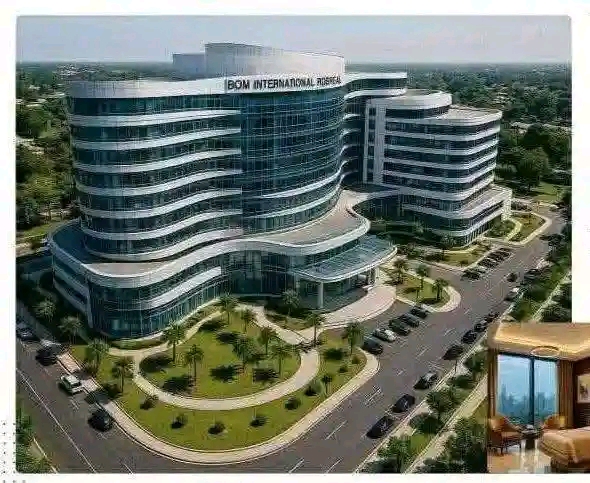
At the heart of the development is the Ibom International Hospital, envisioned as a quaternary-level referral centre offering some of the most advanced medical services available on the continent. The facility is expected to accommodate more than 60 medical specialties, including cardiology, oncology, transplant medicine, neurosurgery, reproductive medicine, robotic surgery, critical care, and genomics research.
Its planned infrastructure includes a PET-CT scanner, a cyclotron, a 3T MRI system, TrueBeam radiotherapy technology, specialised transplant theatres, advanced catheterisation laboratories, and a Da Vinci robotic surgery platform. The hospital will also feature a helipad, wellness centres, research facilities, and smart hospital technology.
These are not the characteristics of a conventional state hospital. They are the building blocks of a healthcare ecosystem designed to compete for patients who would otherwise travel abroad for treatment.
The significance of such a facility extends beyond healthcare delivery. Medical tourism stimulates economic activity across multiple sectors. Patients travelling for treatment spend money on transportation, accommodation, food, insurance, and other support services.
Healthcare professionals relocate to areas with advanced opportunities, while pharmaceutical companies, researchers, and educational institutions are attracted to emerging healthcare hubs.
This explains why many countries increasingly view healthcare infrastructure as an economic asset rather than merely a social service.
Recognising the potential of the project, the Minister of Health and Social Welfare, Professor Muhammad Ali Pate, commended Governor Eno's vision and pledged Federal Government support for its successful completion and operation.
The minister described the Medical City as a practical reflection of ongoing healthcare reforms and promised to facilitate engagement with Nigerian healthcare professionals in the diaspora who may be willing to contribute their expertise.
His comments highlight another important reality. Buildings and equipment alone do not transform healthcare systems. Skilled professionals do.
Perhaps recognising this challenge, the state government announced plans to send 100 Akwa Ibom indigenes abroad for specialised training before the completion of the project. According to the Project Manager, Dr. Teinye Isokariari, the objective is to ensure that local professionals are adequately prepared to operate and maintain the sophisticated technologies that will define the facility.
The healthcare workforce strategy is further strengthened by Governor Eno's disclosure that his administration has recruited 2,844 healthcare workers since March 2025 to improve service delivery across the state.
Equally significant is the broad endorsement received from healthcare professional bodies, including the Nigerian Medical Association, Medical and Dental Consultants Association of Nigeria, Association of Resident Doctors, Pharmaceutical Society of Nigeria, and several nursing and allied health organisations.
Such support is noteworthy within a sector that is often critical of large-scale government initiatives. It suggests confidence among healthcare professionals that the project has the potential to address longstanding gaps in specialised healthcare delivery.
The Secretary-General of the Nigerian Cancer Society described the Medical City as a bold initiative capable of improving cancer treatment and healthcare outcomes nationwide, while the leadership of the Nigerian Medical Association praised the state's investments in healthcare and workforce retention.
Yet ambition alone does not guarantee success.
Across Africa, impressive healthcare projects have sometimes struggled with maintenance challenges, staffing shortages, equipment downtime, and financial sustainability. The true test of the Ibom Medical City will not be the sophistication of its design or technology but its ability to maintain global standards, retain talent,t and remain operationally efficient for decades.
These are legitimate concerns that policymakers must continue to address.
Nevertheless, the significance of the project cannot be ignored. For decades, Africa's wealthiest patients have exported billions of dollars in search of healthcare elsewhere. The Ibom Medical City represents a bold effort to keep some of that wealth within the continent while rebuilding confidence in African healthcare institutions.
If successful, it will achieve more than treating the disease. It will demonstrate that Africa can build, sustain, and trust institutions capable of delivering world-class healthcare. In a continent long defined by medical departures, that may prove to be its most important prescription.
Comments