
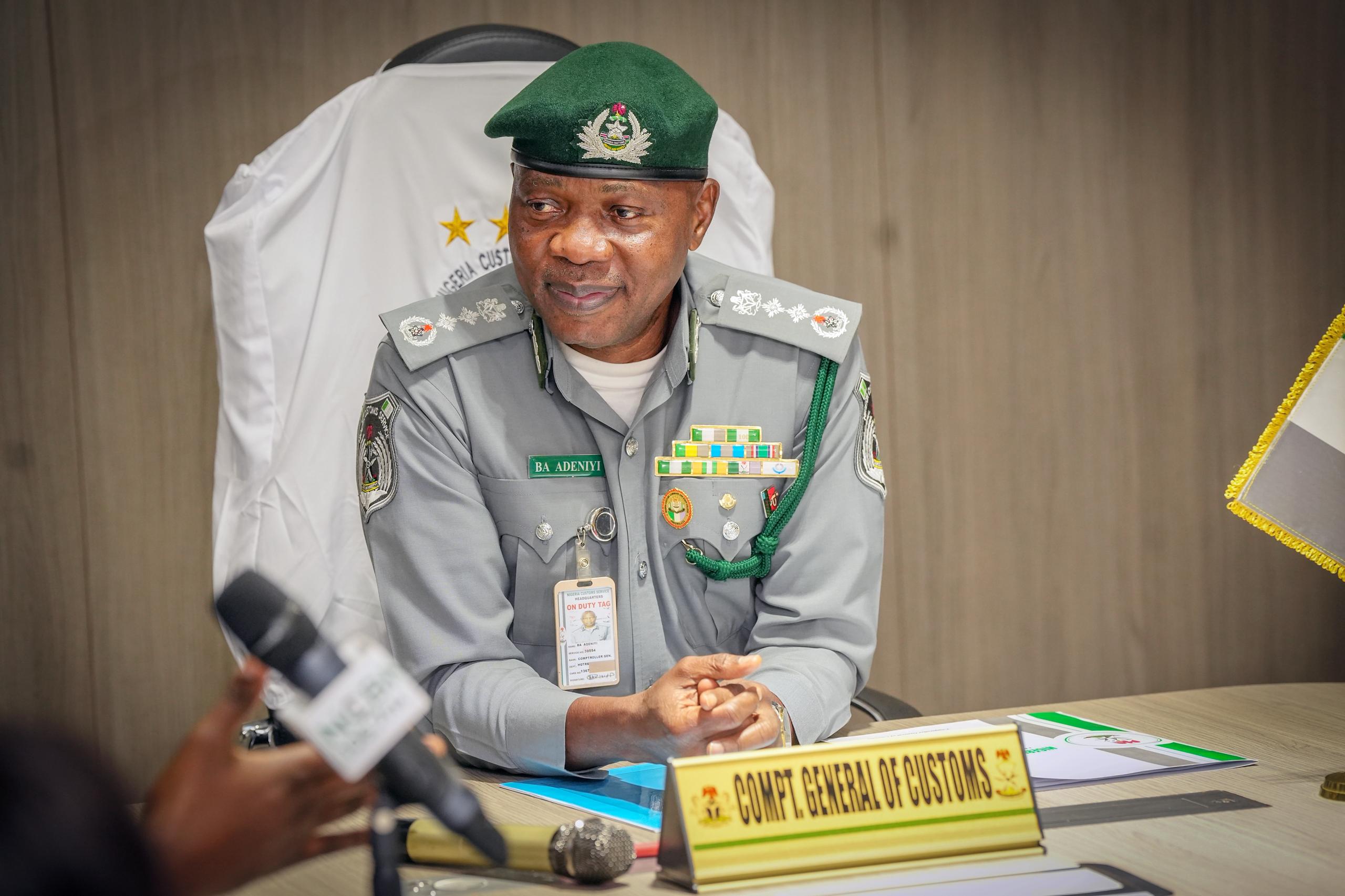
It is no longer news or media propaganda, but it is a reality that even a blind person in the street can confirm and testify that the Nigeria Customs Service (NCS), under the current leadership of Comptroller- General of Customs(CGC) Bashir Adewale Adeniyi PhD, FNIPR, PSC has brought new shapes, or reforms with remarkable successes and achievements recorded since his assumption in office as the Comptroller- General of Customs.
Some of these new reforms and achievements can be seen even the recent signing of Memorandum of Understanding (MoU) between the Service, the Federal Fire Service (FFS), and Unilever Nigeria Plc. The agreement which was signed aimed to strengthen inter-egency and public- private collaboration, enhance security, protect legitimate trade, safeguard lives and consumers, as well as to support Nigeria's economic growth.
During the agreement signing between the Service and the Federal Fire Service, Adeniyi described the signing as a bold, deliberate and strategic step towards strengthening inter -agency collaboration and supporting the shared mandates of both agencies to protect lives, property and critical national assets.
He noted that the agreement would further enhance fire safety standards across the Customs facilities, response to emergencies, and support joint training and capacity building and promote information sharing on fire safety and emergency preparedness.
Similary, Comptroller- General while signing the agreement with Unilever Nigeria Plc, he reflected the Service's commitment, partnership and collaboration collaboration with Private Sector in addressing those challenges affecting trade and industrial development.
He also believed that the signing of MoU would further provide a structured channel for real-time information on trade marks, product identification features, packaging and products samples.
Under the present leadership of Adeniyi,
It is a clear evidence that across the evolving architecture of global trade governance, customs administrations are increasingly being called upon to perform responsibilities that extend far beyond revenue collection and traditional border control.
This, can also be seen of hosting a delegation from the Nigerian Customs (Donanes du Niger) by the Kebbi Area Command held at the Command Headquarters on the Thursday 27th August 2026, to deliberate on emerging issues affecting trade along the Kamba- Tunga Gyado border corridor, with a view to facilitating legitimate trade, generating revenue and bringing relief to communities on both sides of the border.
Under Adeniyi, it's beyond expectations that within 24hours, an Area Command can generate revenue collection of Twenty- Eight Billion,Nine Hundred and Fourteen Naira,Sixty -One Kobo(N28,102,000,914.61k).
This historic revenue milestone happened at Nigeria Customs Service, Apapa Area Command on 18 August 2026, the feat surpassed the previous daily record of N20.1 billion achieved in 2025, shortly after the assumption of office of the present Customs Area Controller (CAC) Comptroller Emmanuel Oshoba.
The Comptroller- General of Customs under his leadership has not only build the transnational security threats, digitised commerce, supply chain disruptions and rapidly shifting geopolitical realities, but he has also made Customs to assumed a more strategic role at the intersection of enforcement, diplomacy, innovation and trade facilitation.
The modern customs administration is no longer judged merely by seizures made or duties collected, but by its capacity to anticipate risk, build partnerships, deploy intelligence and shape global standards.This transformation is redefining how customs institutions engage with one another. Multilateral cooperation, and largely confined to technical exchanges and operational support, is now evolving into a broader framework of shared governance where Customs administrations contribute directly to global economic resilience, supply chain integrity and coordinated responses to emerging risks. Intelligence-led operations, digital border management and strategic diplomacy have become central pillars of this new doctrine.At the centre of this transformation remains the World Customs Organisation (WCO), the global body responsible for promoting customs cooperation and setting standards for secure and efficient trade. Through its enforcement, capacity-building and technology platforms, the WCO continues to provide a framework through which Customs administrations are adapting to increasingly complex border realities.
Within this changing landscape, the growing prominence of the Nigeria Customs Service (NCS) reflects not only institutional reform at home, but a widening influence in shaping international customs dialogue.
Under the leadership of the Comptroller-General of Customs and Chairperson of the WCO Council, Bashir Adewale Adeniyi, MFR, the Service is increasingly positioning itself not simply as a participant in global customs affairs, but as a contributor to the ideas and partnerships defining its future.Global Enforcement Cooperation and a Historic Shift in Customs Dialogue that evolving and this came into a sharp focus on 23 March 2026, when the Comptroller-General made history at the opening of the 46th Session of the WCO Enforcement Committee at the organisation’s headquarters in Brussels.
The occasion marked the first time in the Committee’s 43-year history that its opening session was jointly addressed by the WCO Secretary-General, Ian Saunders, and the Chairperson of the WCO Council, an unprecedented development that signalled the growing strategic relevance of enforcement within the broader customs governance ecosystem.Beyond symbolism, the moment represented a significant institutional milestone. It underscored a deeper shift within the Enforcement Committee itself from a predominantly operational platform focused largely on seizures and interdictions into a more policy-driven body engaging emerging concerns such as intelligence sharing, supply chain vulnerabilities, trade-based money laundering and advanced detection technologies.
It is quite appreciated that this evolution is being reinforced by the ongoing review of the Committee’s Terms of Reference, last revised in 2009, as member administrations seek to align its governance framework with contemporary trade and security realities.
In his keynote address, Adeniyi framed this transformation in clear terms, stressing that customs enforcement in the modern era must be anchored on intelligence, cooperation and shared responsibility.“Customs enforcement today is no longer about isolated seizures; it is about protecting the integrity of global trade,” he stated.
His intervention resonated as both a reflection of Nigeria’s operational philosophy and a broader call for coordinated global action against increasingly sophisticated threats confronting supply chains worldwide.
Significantly, the Nigeria Customs Service contributed field-level perspectives to deliberations, drawing from its experience managing one of Africa’s most dynamic and challenging border environments. These also reinforced the role of frontline operational realities in shaping international policy responses.
The Comptroller-General further emphasised that stronger collaboration among Customs administrations remains indispensable to global economic security.“When Customs administrations work together, enforcement becomes stronger, trade becomes safer, and the global economy becomes more resilient,” said.
On the high-level bilateral meeting between the Nigeria Customs Service and His Majesty’s Revenue and Customs (HMRC) of the United Kingdom held in London under the Nigeria–United Kingdom Enhanced Trade and Investment Partnership framework.At the heart of the engagement was a recognition that modern trade facilitation requires more than streamlined procedures it depends on transparent data systems, interoperable digital platforms and mutual confidence between border agencies.One of the most significant issues addressed was the discrepancy in bilateral trade statistics. While Nigeria recorded approximately £504 million in imports from the United Kingdom in 2024, UK records indicated exports to Nigeria valued at roughly £1.7 billion in the same period.Rather than viewing the disparity as merely statistical, both administrations approached it as a structural challenge requiring coordinated solutions.
This also led to discussions on establishing a structured pre- arrival data exchange framework between both customs administrations to strengthen risk management, improve reconciliation and support compliance monitoring.
According to the Comptroller-General, such engagements reflect the growing recognition that customs cooperation is fundamental to economic development.
He noted that customs administrations remain frontline institutions for ensuring that trade flows are transparent, secure and mutually beneficial.
The engagement also produced outcomes extending beyond data governance, including discussions on Customs Mutual Administrative Assistance, technical cooperation and knowledge exchange in digital border management.Collectively, these developments signalled an emerging model of customs diplomacy one where bilateral cooperation serves as both a trade facilitation tool and a strategic instrument of institutional modernisation.Technology, Innovation and the Future of Border Management.
Also, at the 2026 WCO Technology Conference and Exhibition in Abu Dhabi, where innovation emerged not as a supporting tool, but as a defining force in customs transformation.
The conference under the theme “Customs Agility in a Complex World: further Securing and Facilitating Trade through Innovation."
The conference which brought together administrations, technology providers and policymakers to explore how digital solutions can reshape border management.also for Nigeria, participation in the conference represented more than attendance at a global event. It served as a platform to project its modernisation agenda and contribute to evolving conversations around technology-enabled customs operations.
Speaking during a high-level panel session, Adeniyi underscored the role of structured international collaboration in addressing emerging cross-border risks.“Our experience has shown that robust engagement with international organisations such as INTERPOL, WIPO and the Universal Postal Union creates opportunities for deeper cooperation, especially in tracking criminal networks, protecting intellectual property and managing emerging trade risks,” he stated.
His interventions linked technology not merely to automation, but to institutional agility.According to him, agility in customs administration requires more than deploying platforms; it requires the capacity to absorb change, adapt to evolving threats and continually renew operational approaches.Particularly significant was his emphasis on data exchange and customs-to-customs cooperation in tackling global challenges such as cargo diversion and illicit supply chain exploitation.“Diversion of goods in transit is not unique to Nigeria; it is a global challenge requiring coordinated Customs-to-Customs cooperation,” he noted.
The conference also highlighted Nigeria’s expanding technological footprint through the Trade Modernisation Project, including presentations on cloud computing, advanced analytics and the indigenous B’Odogwu platform, which showcased Nigeria’s growing contribution to customs technology solutions.
This positioning was significant. It reflected a shift from technology adoption toward technology contribution an increasingly important distinction for emerging customs administrations seeking influence within the global system.
As Adeniyi observed, sustainable innovation must equally be supported by investment in human capital renewal, ensuring technology serves institutional effectiveness rather than becoming an isolated reform symbol.Strategic Partnerships and the Expanding Geography of Cooperation.
Beyond Europe and the Gulf, Nigeria’s expanding customs diplomacy also found expression in Asia through growing engagement with the Royal Malaysian Customs Department.
Here, the emphasis was not only on facilitating expanding trade flows but on institutionalising cooperation through formal frameworks capable of sustaining long-term collaboration.
Against the backdrop of trade volumes that have risen from ₦159.9 billion in imports in 2020 to ₦716 billion in 2024, with cumulative trade estimated at ₦1.82 trillion, both administrations acknowledged that growing economic ties now require stronger customs-to-customs arrangements.
This recognition also informed discussions toward establishing a Mutual Recognition Agreement under relevant WCO frameworks.
According to Adeniyi, the scale of bilateral trade now demands deeper institutional coordination.“The scale of trade between our two countries now demands a stronger institutional relationship between both Customs administrations. Structured cooperation will improve trust, efficiency and compliance,” he said.Beyond trade facilitation, discussions focused on intelligence sharing, illicit trade risks and integrated border management systems.
The engagement also offered a platform for mutual learning, with Malaysia presenting its evolving border control architecture while Nigeria highlighted its Authorised Economic Operator programme and broader facilitation reforms.
Importantly, the meeting reinforced a broader reality: that customs partnerships today are increasingly multidimensional, encompassing enforcement, technology, trade efficiency and shared security interests
.This widening geography of cooperation reflects an emerging strategic orientation within the Nigeria Customs Service—one that views diplomacy as an operational extension of customs modernisation.
The stakeholders at the conference reflected the emergence of a broader institutional philosophy in which enforcement, innovation and international cooperation are increasingly treated as interconnected pillars of customs governance.
At the centre of this philosophy is a recognition that effective customs administration in the twenty-first century cannot rely solely on traditional doctrines of control, but it requires intelligence-led collaboration, technology-driven adaptation and strategic partnerships capable of responding to evolving trade and security complexities.
Through leadership at the WCO Enforcement Committee, bilateral diplomacy with strategic partners and active contributions to global innovation platforms, the Nigeria Customs Service is increasingly helping shape this emerging architecture.
Under the current leadership of Comptroller- General of Customs,the Service is demonstrating how global engagement can translate into domestic institutional strength, and Customs administration is evolving beyond traditional border control into a more integrated doctrine where intelligence, technology and cooperation shape both operational effectiveness and strategic relevance.
The Nigeria Customs Service’s growing role within that transformation reflects more than institutional visibility; it signals a deeper maturation of customs leadership rooted in ideas, partnerships and reform.
The historic opening of the WCO Enforcement Committee, strategic engagements with HMRC and Malaysian Customs, and active participation in global technology discourse collectively point toward an administration increasingly aligned with the future of customs governance.
Beyond seizures and beyond systems, the Nigeria Customs Service is contributing to a new model of intelligent customs administration, one where diplomacy strengthens enforcement, innovation enables facilitation, and cooperation sustains resilience.
CGC Adeniyi who was recently received commendation by President Bola Ahmed Tinubu and hailed the Service for the continental recognition of the Nigeria Customs Service (NCS) modernisation project, as well as the selection of a subsidiary of Nigerian-owned Bergmans Security Consultant and Supplies Limited for a 20-year, multi-billion-dollar African Continental Free Trade Area (AfCFTA) Customs Modernisation Project, describing the development as a validation of Nigeria’s growing capacity to develop homegrown solutions for the wider African market.
The President’s commendation was conveyed in a State House press release issued on Monday, August 10, 2026, by his Special Adviser on Information and Strategy, Bayo Onanuga following the selection of Bergmans’ subsidiary, AfriTrade CMP Limited, to implement the continental project, which is designed to deploy digital and physical infrastructure to enhance customs processes, cargo tracking, border management and trade-data exchange across participating African countries.
According to President Tinubu, the development is particularly significant because another subsidiary of the Nigerian firm, Trade Modernisation Project Limited, is already implementing Nigeria’s homegrown customs modernisation programme through the NCS, demonstrating the depth of Nigerian expertise now shaping the future of customs administration and continental trade infrastructure.
Building on this recognition, President Tinubu asserted that the solutions developed and tested in Nigeria are increasingly providing a model for other African countries, describing the development as evidence that Nigerian institutions and businesses possess the expertise and capacity to build the technology and infrastructure required to make Africa’s single market more efficient and competitive.
“What has been built and tested in Nigeria is now providing a model for the continent. This is how African integration should work: Africans building African solutions for African market. Nigerian institutions and businesses can help build the technology and infrastructure that will make that market work. Under our Nigeria First policy, we will continue to create opportunities for capable Nigerian businesses to compete at home, across Africa and globally. I commend Bergmans, AfriTrade CMP Limited, Trade Modernisation Project Limited, the Nigeria Customs Service, CGC Bashir Adewale Adeniyi and the Nigerian professionals whose work has earned this confidence,” the President said.
President Tinubu further noted that the continental recognition of Nigeria’s customs modernisation model reflects the progress being recorded in the transformation of the Service under the leadership of Comptroller-General of Customs Bashir Adewale Adeniyi, MFR. He stressed that the growing adoption of Nigerian-developed customs technologies and systems demonstrates the value of sustained investment in digital transformation, institutional capacity and indigenous expertise.
The President’s position was reinforced during a visit by the Secretary-General of the AfCFTA Secretariat, Wamkele Mene, to the NCS Headquarters in Abuja, where he inspected the Trade modernization project in operation. The visit was undertaken alongside members of the Senate Committee on Customs, led by Senator Jibrin Isah, following the conclusion of a two-day retreat focused on customs modernisation and reforms.
During the visit, Mene described B’Odogwu, Nigeria’s indigenous Unified Customs Management System, as a model with potential for wider adoption across Africa. He disclosed that non-African companies had also offered similar solutions but emphasised that the AfCFTA had chosen an African solution, highlighting the significance of African expertise, innovation and enterprise in building the continent’s trade architecture. Senator Isah, after witnessing the systems in operation, similarly expressed the committee’s support for the init
Comments