
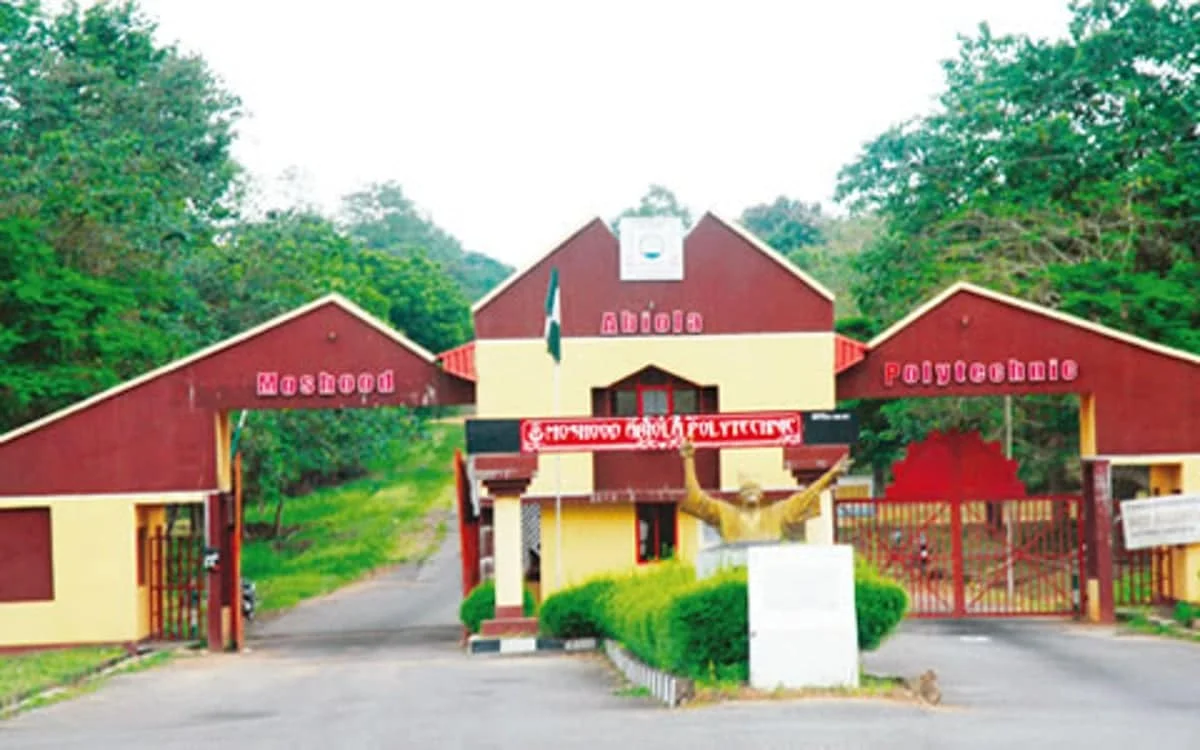
Authorities of Moshood Abiola Polytechnic (MAPOLY), Abeokuta, have expelled a total of 365 students for gaining admission into the institution using falsified academic credentials.
According to a statement issued by the Public Relations Officer of the polytechnic, Mr. Yemi Ajibola, and made available to journalists on Monday, the expelled students were found guilty after a thorough verification exercise conducted on academic documents submitted during admission and registration.
Ajibola explained that the affected students, who were enrolled in various Higher National Diploma (HND) programmes, presented fake National Diploma results and forged transcripts from different institutions in order to gain admission.
He noted that the institution discovered the malpractice after a comprehensive audit of student records, which exposed widespread irregularities in submitted credentials.
“The expulsion followed a comprehensive verification exercise conducted on the credentials submitted by students during the admission and registration processes,” the statement read.
The institution emphasized that the decision reflects its zero-tolerance policy towards academic fraud and misconduct, stressing its commitment to sanitizing the academic environment.
Ajibola further revealed the distribution of the expelled students across different schools within the institution. The School of Communication and Information Technology was the most affected, with 156 students expelled. It was followed by the School of Business and Management Studies with 117 students, while the School of Science and Technology recorded 54 affected students. The School of Engineering had 36 students expelled, and the School of Environmental Studies recorded the least with just two students.
The Rector of the institution, Dr. Koye Jolaoso, warned prospective applicants against the use of fake academic credentials, stating that the institution would continue to enforce strict academic standards.
He said the decision reflects MAPOLY’s commitment to academic integrity, transparency, and excellence, adding that the institution is working to reposition itself as a model of professionalism among tertiary institutions in Nigeria.
Dr. Jolaoso urged admission seekers to rely on legitimate academic pathways, warning that any attempt to circumvent admission processes would be met with strict disciplinary action.
The development has sparked discussions across the education sector on the growing challenge of academic fraud and the need for stronger verification systems in Nigerian tertiary institutions.
Comments